
 ×
×

Within emergency departments (EDs) and intensive care units (ICUs), nurses are on the front lines, making critical decisions in unpredictable situations. While vital signs like heart rate and oxygen are easily tracked, brain activity has remained elusive, especially when patients suddenly become unresponsive.
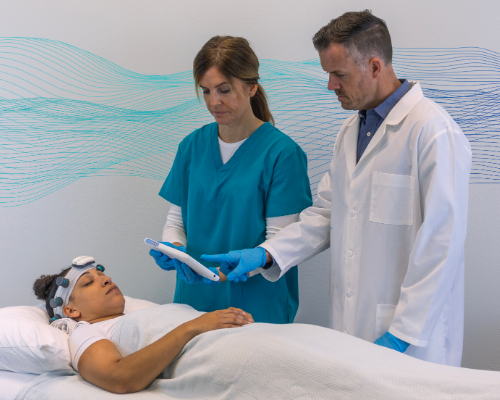
That’s where BrainWatch comes in. Provided by Natus, the global leader in EEG innovation, BrainWatch Point-of-care EEG (POC-EEG) system is a rapid EEG tool that delivers instant, precise brain monitoring. BrainWatch puts real-time brain data directly in the hands of nurses at the bedside, giving care teams quick access to answers when time matters most.
When a patient suddenly stops responding or seems “off,” it’s difficult to know if the cause is sedation, stroke, or something hidden such as nonconvulsive seizures (NCS) or status epilepticus (SE). These events are more common than many realize and can only be confirmed with EEG. Prompt detection is critical, as delays in identifying and treating can lead to prolonged seizures, increased complications, and worse long-term outcomes. The challenge is that access to EEG is often delayed, leaving nurses and care teams without the information they need in the moment.
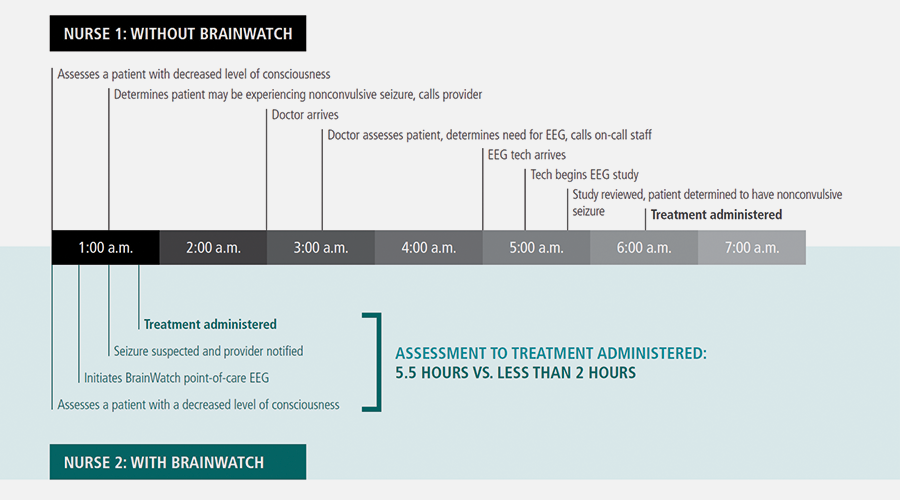
Point-of-Care EEG solutions like BrainWatch help close the critical gap between suspected seizure and actionable data by bringing EEG directly to the bedside. Instead of waiting for traditional setup, which can take several hours depending on staffing, workflow constraints, and equipment availability, nurses can quickly deploy BrainWatch and begin monitoring brain activity. This faster access to neurological insights helps nurses and care teams detect potential hidden neurological problems quickly and act promptly to guide timely treatment.
Stat: Nearly 30% of all critically ill patients have seizures, many of them subclinical.
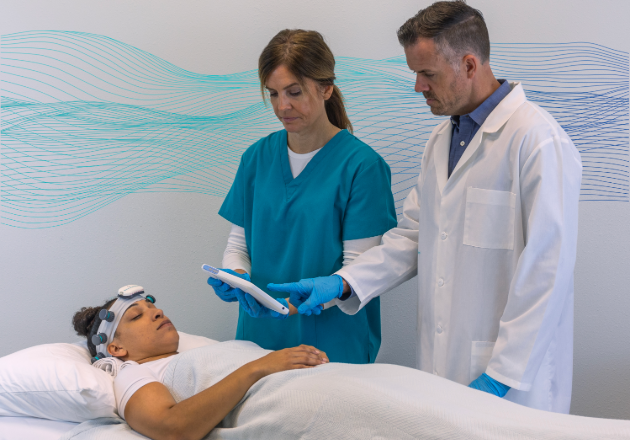
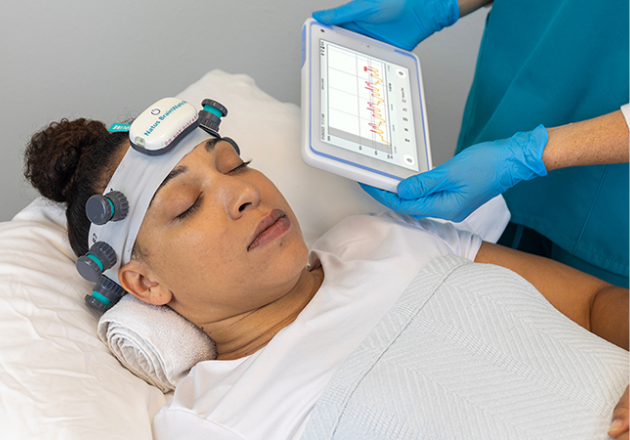
With traditional EEG setups, it can take time for EEG techs to reach the bedside, especially at night, on weekends, and during holidays. BrainWatch enables nurses to initiate brain monitoring in just a few minutes, with no specialized EEG training required. Its headband-style design, combined with easy-twist electrode and gel deployment and a user-friendly bedside tablet, allows any ED or ICU clinician to start monitoring quickly—whether during routine assessments or urgent care situations. By providing real-time brain activity at the bedside, rapid EEG devices like BrainWatch help nurses gain timely insights to support informed decision-making, triage patients to neurology more efficiently, and reduce unnecessary transfers.
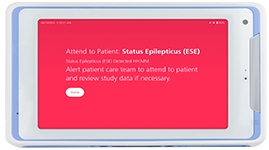
In critical moments, early intervention can be the difference between recovery and irreversible harm. Point-of-care EEG is the easiest way for care teams to identify seizure activity, support diagnosis and protect patient health. BrainWatch provides instant insights on brain activity, eliminating guesswork when seizures are suspected. The system immediately displays seizure burden value and alerts to suspected seizures or status epilepticus (ESE), empowering real-time decision making.
Because BrainWatch allows for quick setup to begin brain monitoring within minutes, it helps reduce the dangerous lag between suspicion and treatment. This is crucial, as delays in traditional EEG can mean clinicians are operating well outside the window where first-line therapy is most effective. Nurses’ clinical instincts are reinforced with objective data, giving them the confidence to push for interventions when every second matters.
Stat: Achieving seizure control within 60 minutes is associated with better outcomes for patients with NCS.
Nurses often sense when something isn’t right neurologically, but without the right tools, confirming those concerns can be a challenge. To confirm what they sense, nurses need a clear view of the brain. EEG is the only way to see brain activity in real time. With BrainWatch Point-of-Care EEG, that capability is now in nurses’ toolbox at the bedside to help determine in the moment if a patient is having a seizure.
BrainWatch data is wirelessly uploaded to a secure portal for 24/7 neuro consultation, while the auditory and visual alarms alert staff to changes in neurological status. This added layer of support helps ensure that potential issues are not only recognized, but acted on quickly.
This access to real-time brain monitoring empowers nurses and care teams to quickly identify potential neurological issues and act with confidence, giving them greater assurance when advocating for the care their patients need.
Stat: As few as 3% of ED patients with suspected seizures receive EEG confirmation within 24 hours.
In acute care, interruptions can be constant—and they can come at a cost. Frequent disruptions can increase stress on nurses, impact performance, and take valuable time away from patient care. The reality is, nurses don’t have time for tools that slow them down. Nurses already juggle innumerable tasks, so any new device must work with, not against, their routines. BrainWatch was designed with nursing workflow in mind. It’s wireless, portable, and easy to use during routine assessments or in urgent situations. Setup takes less than 5 minutes and monitoring can be initiated even while checking vitals or administering medications. BrainWatch simplifies care, giving nurses an important window into the brain, without disrupting their workflow.
Stat: Nearly 75% of interruptions in acute care settings cause major disruptions to nursing workflows that can degrade performance and increase stress.
More nurses are stepping into the role of initiating brain monitoring. With tools like BrainWatch, nurses are empowered to lead in neurocritical situations. That means providing essential data to the team, accelerating care decisions, and helping identify seizures and other potential brain issues earlier than ever before. By taking the lead in brain monitoring, nurses are helping to close critical gaps in care and bring life-saving treatments to patients faster.
Stat: Research demonstrates that nurse-led EEG testing in the ED leads to significantly shorter time-to-treatment.
BrainWatch is designed with nurses in mind, supporting acute neurological care at the bedside. Whether a patient becomes unresponsive or “just doesn’t look right,” with BrainWatch, nurses have a fast, easy tool to see what’s happening in the brain without waiting for an EEG specialist. BrainWatch fits neatly into a nurse’s workflow, offering reliable data in minutes and empowering nurses to act with confidence.
BrainWatch can be an important first step toward in supporting confident clinical assessment and helping nurses protect patients from the risks of undetected seizure activity with effective, timely treatment.


052641 RevA